
Discovery and user research
Clarify users, tasks, business constraints and existing evidence before moving into interface design. Discovery separates known problems from assumptions that still need to be tested.
04Product design
Turn requirements and assumptions into clear journeys, testable prototypes and reusable interfaces before expensive engineering decisions become difficult to change.
Clarify users, tasks, business constraints and existing evidence before moving into interface design. Discovery separates known problems from assumptions that still need to be tested.
Organize product flows and information around the tasks people need to complete. Important states, decisions and edge cases are considered alongside the ideal journey.
Explore navigation, hierarchy and critical workflows before committing to production implementation. Prototypes help teams answer expensive product questions earlier.
Observe representative users completing realistic tasks and turn findings into product decisions. Testing helps reveal friction that polished screens alone cannot identify.
Create consistent components, content patterns and interaction states with accessibility considered during design and implementation. Reusable systems reduce ambiguity for engineering and future product work.
ProofRelated work

A focused subscription product delivered for an early-stage founder without an in-house technical team.
View case study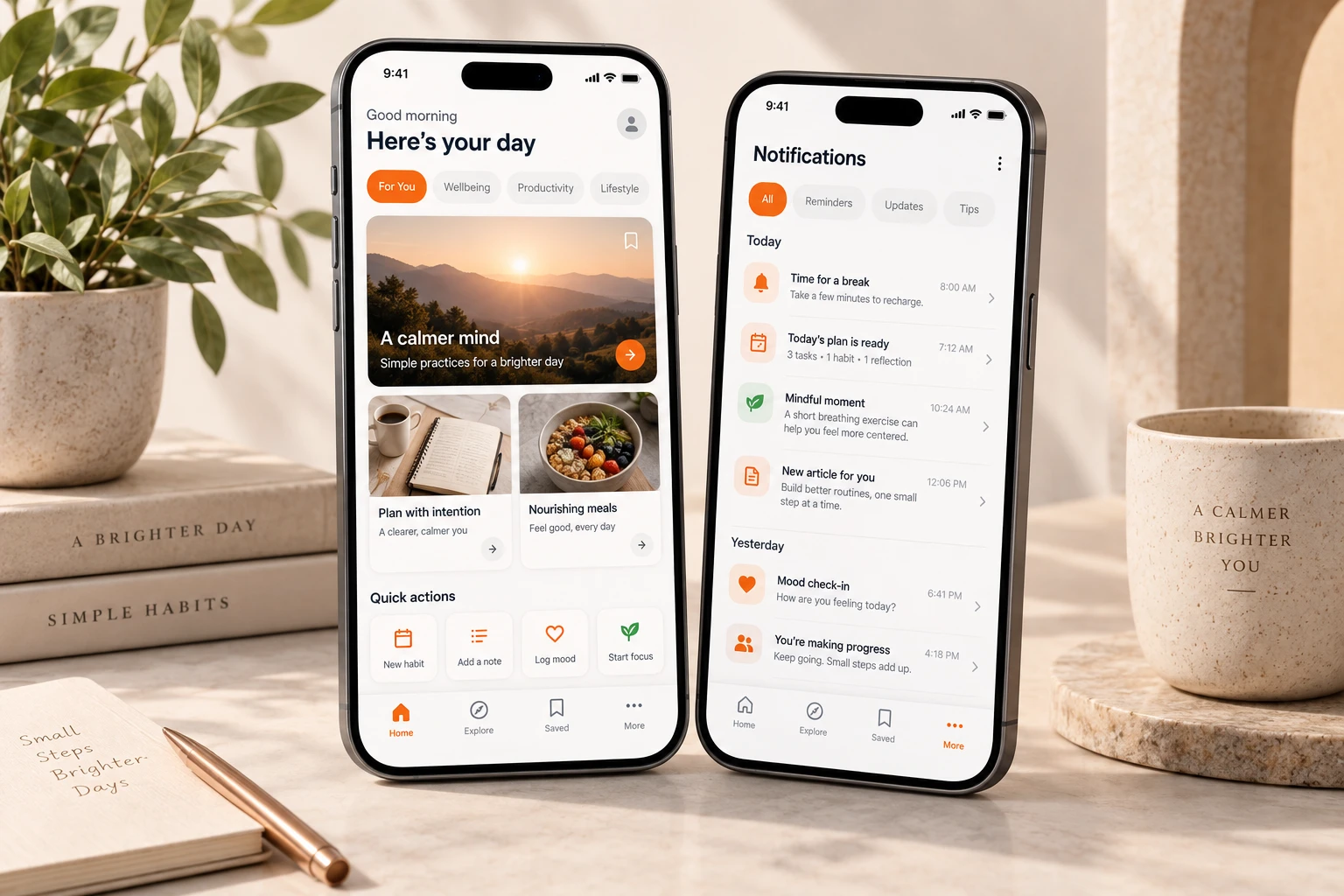
A mobile app redesign improved responsiveness, navigation and personalized user experiences.
View case studyFAQBefore we begin
Yes. Discovery is useful precisely when priorities, workflows or assumptions still need clarification. The goal is to reduce uncertainty before committing to a large engineering scope.
A wireframe describes structure and hierarchy. An interactive prototype connects screens and states so important journeys can be reviewed or tested before production development.
A project can include reusable components, documented states and interaction patterns when that level of systemization fits the product and its expected pace of change.
Scope depends on product stage, number of critical journeys, research access, prototype fidelity, testing requirements and whether a reusable design system is needed.
Share the product stage, primary user group, most important journey, known friction points and any research, analytics or customer feedback you already have.