
Custom web applications
Turn customer or internal workflows into focused software. Discovery identifies the users, permissions, business rules, integrations and operational outcome the product needs to support.
05Web & SaaS
Build custom web products around the people, permissions, data and business rules that make the workflow work in practice.
Turn customer or internal workflows into focused software. Discovery identifies the users, permissions, business rules, integrations and operational outcome the product needs to support.
Plan account structures, roles, subscriptions, lifecycle states and product boundaries before they become expensive constraints. Architecture should reflect how the service is sold and operated.
Bring operational information and actions into interfaces organized around the decisions teams make each day, rather than reproducing disconnected spreadsheets and tools.
Connect the product to payment, communication, CRM and other systems through explicit, maintainable interfaces with clear error and recovery behavior.
Treat authorization, accessible interaction and observable browser performance as product-quality requirements. Testing, deployment and monitoring are planned alongside the initial release.
Prepare production delivery, monitoring and a practical post-launch model. The first release should create a maintainable foundation for evidence-led improvements rather than becoming a dead end.
ProofRelated work

A focused subscription product delivered for an early-stage founder without an in-house technical team.
View case study
Vendor management, automated commerce workflows and payment distribution supported a growing marketplace.
View case study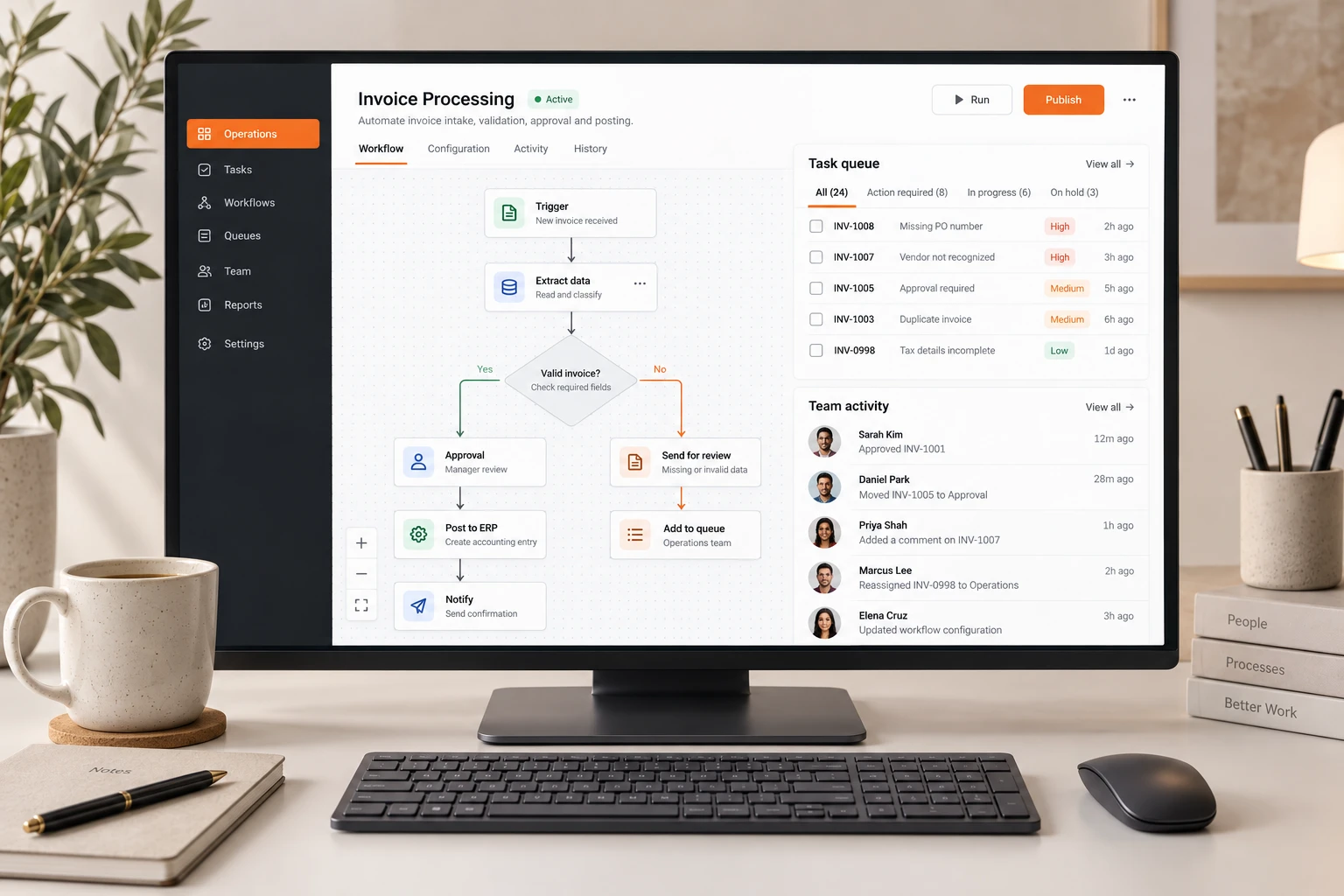
A role-based web application connected business tools and reduced repetitive operational work.
View case studyFAQBefore we begin
Yes. The initial scope can focus on the smallest coherent product, while architecture, monitoring and handover are planned so the product can continue to evolve after release.
Account and organization models, roles, billing states, permissions, notifications, data boundaries and administrative workflows are common early decisions. The exact set depends on the product.
An engagement can begin with an existing product, its architecture and its main user or operational problems. Improvement may involve targeted UX, performance, integration or modernization work rather than replacement.
The main factors are user roles, workflows, integrations, data and security requirements, design maturity, target launch window and the amount of existing software that must be understood or changed.
Tell us who will use the product, its key workflows and integrations, account or subscription model, launch goal and any known scale or security constraints.