
Start with a specific workflow
We begin with the people, information, systems and decisions involved in the work. This keeps the project focused on a useful operational outcome instead of adding an open-ended AI feature.
01AI & automation
Build assistants, knowledge search and connected automations around a defined business workflow, with clear boundaries for review and approval.
We begin with the people, information, systems and decisions involved in the work. This keeps the project focused on a useful operational outcome instead of adding an open-ended AI feature.
Create focused assistants and search experiences that work with approved business information. Retrieval-based approaches can help when responses need to be grounded in a controlled knowledge base.
Connect automation to the APIs and tools required by the process, with explicit rules for what information can be read, which actions can be proposed and which actions require approval.
Define sensitive steps before launch. Permissions, validation, fallback behavior and human checkpoints help keep consequential decisions observable and reviewable.
Agree on representative tasks and quality criteria, then review failure modes, response quality, latency and cost as the workflow evolves. Evaluation should reflect the real job the system is expected to perform.
ProofRelated work
These projects demonstrate workflow digitization and systems integration. They are not presented as verified generative-AI case studies.
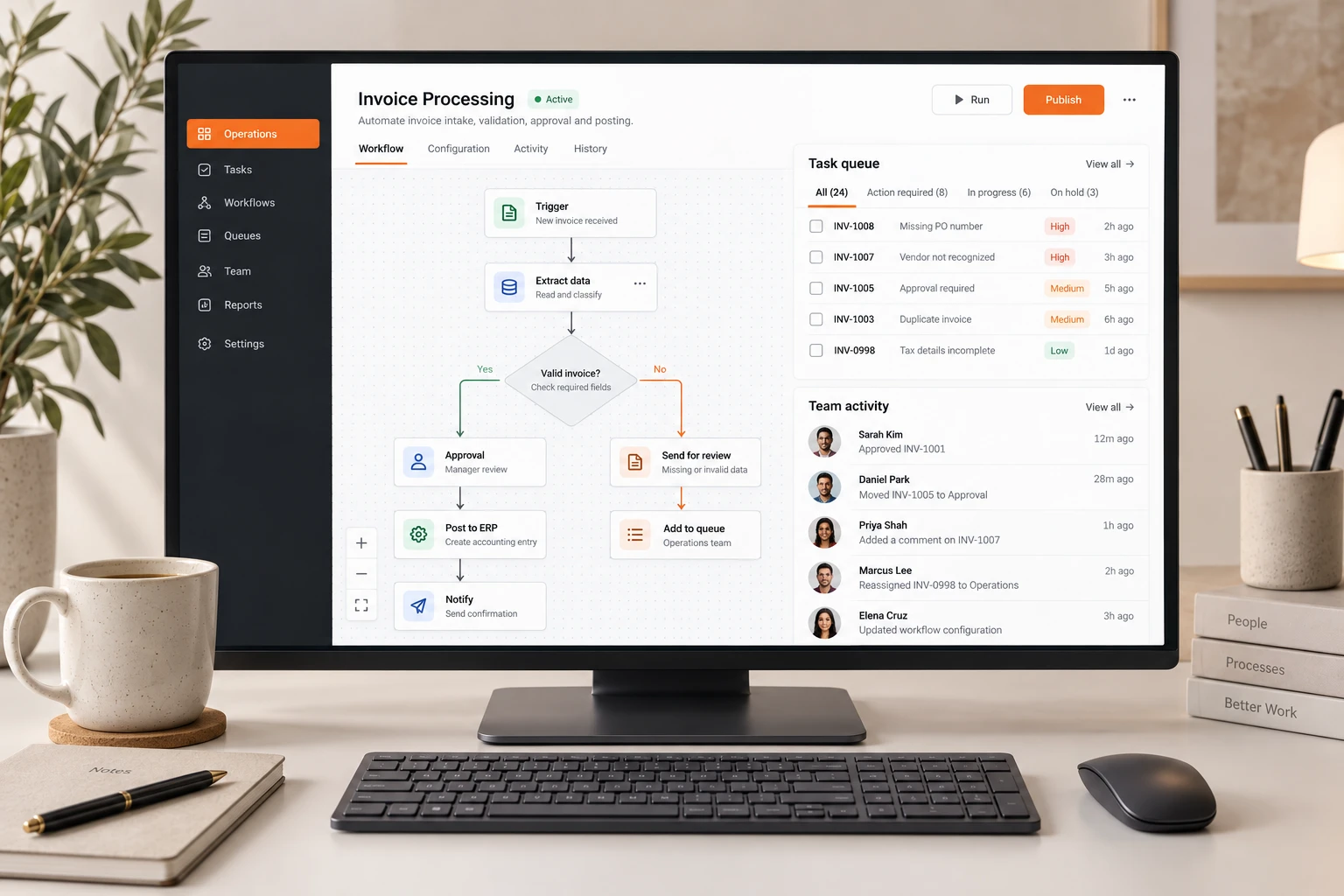
A role-based web application connected business tools and reduced repetitive operational work.
View case study
Custom software digitized time-consuming workflows and connected systems used by an operations-heavy business.
View case study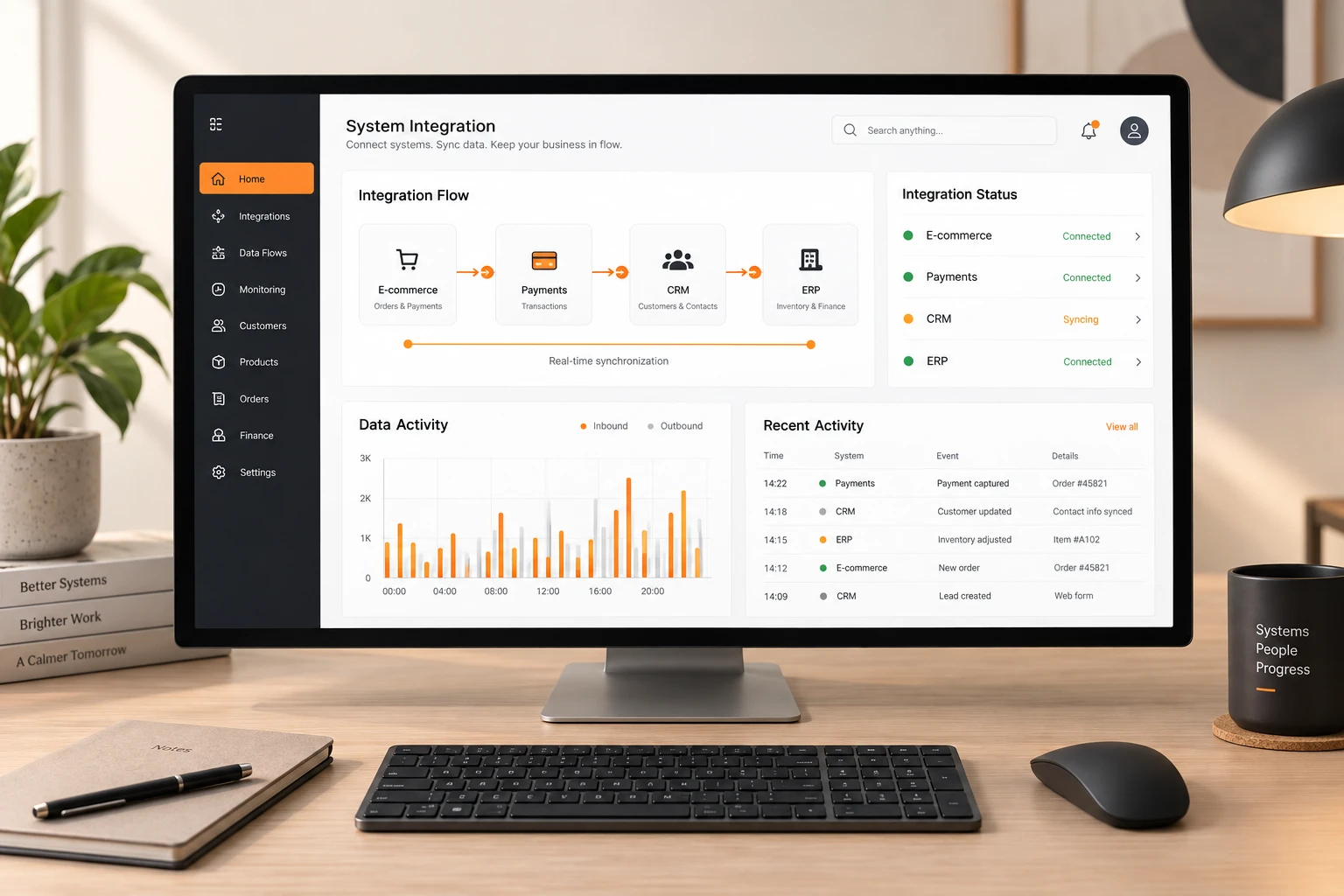
Payment gateways, CRM/ERP systems and internal tools were connected to synchronize data and streamline work.
View case studyFAQBefore we begin
AI is most useful when the task, source information, acceptable output and review boundary can be described clearly. Deterministic rules or conventional automation may be a better fit for processes that require exact, repeatable outcomes.
It can be designed to retrieve from approved sources, subject to the access, privacy and data-handling requirements of the project. The source set and permission model should be agreed before implementation.
A production plan can combine bounded instructions, source retrieval, permissions, validation, representative evaluations and human approval for sensitive actions. The right controls depend on the consequence of an error.
Scope depends on the workflow, integrations, information sources, expected volume, evaluation requirements and approval steps. We use that context to define a practical first release and estimate.
Tell us which workflow you want to improve, which systems or documents it depends on, approximate volume, and where a person must review or approve the result.