
Data pipelines and ingestion
Map source systems, consumers and refresh requirements before selecting an architecture. Clear ingestion and transformation stages make dependencies and ownership easier to understand.
03Data engineering
Bring information together through understandable pipelines and integrations so teams can work from data they can trace, validate and use.
Map source systems, consumers and refresh requirements before selecting an architecture. Clear ingestion and transformation stages make dependencies and ownership easier to understand.
Organize data for reporting and analysis around consistent definitions and the decisions the business needs to make. The structure should support useful queries without hiding business logic in an opaque chain of transformations.
Make important assumptions testable through checks for schema, completeness, expected values, duplicates and freshness where relevant. Reliable reporting depends on visible quality rules and ownership.
Choose update patterns according to how quickly downstream systems need information. Real-time processing is valuable for some workflows, while simpler scheduled processing is more maintainable for others.
Make pipeline failures, source changes and backfill requirements visible. Versioned transformations and understandable dependencies help teams diagnose and recover from data problems.
ProofRelated work
This case demonstrates synchronized data flows between business systems. DevOasis has not yet published a dedicated warehouse or analytics-platform case study.
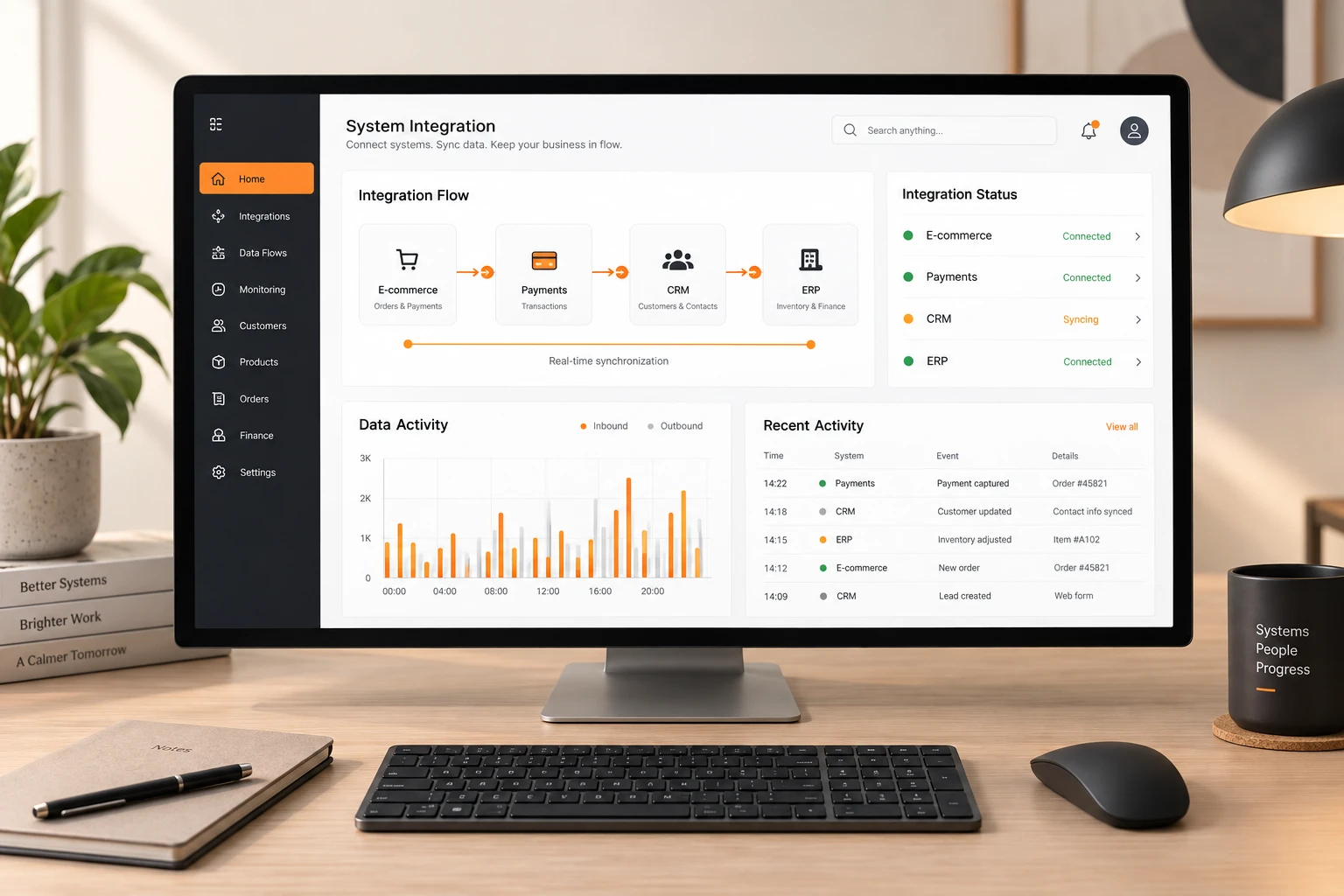
Payment gateways, CRM/ERP systems and internal tools were connected to synchronize data and streamline work.
View case studyFAQBefore we begin
The choice depends on the source systems, destination platform, transformation complexity, governance needs and how quickly data must become available. The architecture should follow those constraints rather than a default pattern.
No. Update frequency should reflect the decisions and workflows that consume the data. Scheduled processing is often simpler and more cost-effective when minute-by-minute updates are unnecessary.
Quality controls can check schema, required values, duplicates, accepted ranges, freshness and unexpected volume changes. The checks should be chosen around the business impact of incorrect data.
Useful inputs include the source and destination systems, expected volume, refresh cadence, affected reports or workflows, known quality problems and any access or governance constraints.
Tell us where your data comes from, where it needs to go, how frequently it should refresh, which reports or workflows depend on it, and where reliability is breaking down.